I began working on this story in 2012. The place it eventually brought me back to had been waiting since I was a child.
A dream in 2012
The first idea came from a dream. Ancient Romans had been thrown into the modern world by an experiment at CERN. That was the dream’s explanation, and it became the starting point of the story I began working on in 2012.
What stayed with me was the encounter. Men whose world I had spent so much of my life imagining were alive in ours. They could look around, ask questions, object. We would have to answer them.
Over the years, the story changed. The original scientific explanation receded. The Romans became particular men, with loyalties, temperaments, and people they had left behind. I brought the story closer to home.
Closer to home
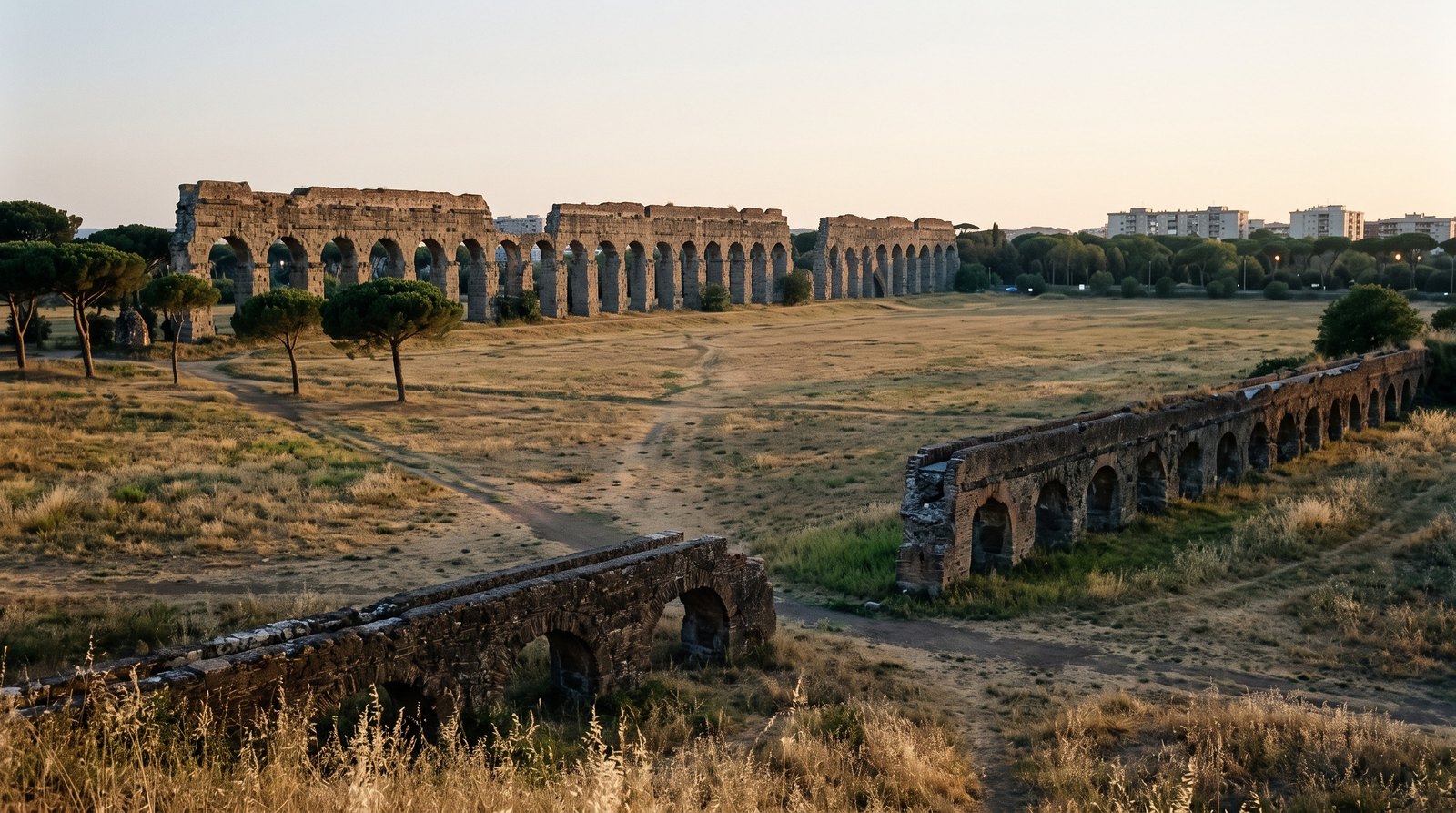
For part of my childhood, I lived a few blocks from Cinecittà. Between the ages of four and nine, I often went to the place now known as Parco degli Acquedotti, the Park of the Aqueducts. The ruins were part of the ground on which I was learning what the world looked like.
They were enormous to a small child. You could stand beneath them and look up through a shape that someone had made long before anyone you knew had been born. People had built those arches for a purpose. Water had passed overhead. Lives had depended on what remained above the grass.
My love of ancient Rome grew out of that nearness. Later came the names, dates, books, and the pleasure of understanding more. The first attachment was to the place itself: the open land, the scale of the stone, the feeling that a whole other world had stood exactly where I was standing.
When the novel found its way to those aqueducts, it acquired a different kind of weight for me. I knew why someone might return there every evening. I knew how a familiar landscape could hold a question for years.
The bumblebee
The childhood encounter with the park, the ruins, and the bumblebee has an autobiographical root. Some of the smallest things in the story come from memories that have lasted longer than the explanations I later attached to them.
A child can be overwhelmed by an ancient structure and then give all his attention to an insect. The two experiences belong together in my memory. Something immense, something small and alive, and the same absorbed attention given to both.
I wanted the book to keep that way of seeing. The Romans built on a scale that can still command our attention across centuries. Yet the world beneath their arches has always contained individual lives. A story can move from the fate of a civilization to the smallest movement beside a path, and remain in the same place.
Before the book, there was a field. Before the history, there was wonder.
Through the studio gates
Living near Cinecittà had its advantages. When I was eight, I appeared as an extra in two major productions with Alberto Sordi. Not a bad perk of growing up a few blocks from the studios.
In 1996, I was working inside Cinecittà at a multimedia company, often crossing paths with famous actors and other celebrities. The year in which Carla meets her Romans is a year I remember from inside the studio gates.
That is another part of the book’s Rome: the ancient ruins I knew as a child and the film studios where I later worked. The past was always close, and so were people making a living inventing other worlds.
The people who stayed
The story lived in my mind and in my heart for more than a decade. During that time, the characters acquired the things an initial idea cannot give them: private attachments, habits, weaknesses, ways of making one another laugh.
Four Romans arriving in the modern world offered comedy immediately. I wanted the men to remain sincere inside it. A machine can be ordinary to Carla and terrifying to someone who has never seen one. Maria can have an excellent practical objection while everyone else is struggling with the nature of reality. The laughter belongs to the meeting of their worlds.
Then there was the love story. Carla and Marcus had to become people whose attraction reached beyond the extraordinary circumstances of their meeting. She is curious about his world; he makes her look again at her own. Admiration, trust, irritation, tenderness: those things need time together. The household became as important to me as the historical upheavals around it.
The question of returning home grew harder as the people became more real to me. Home means the people waiting for you, the obligations you have accepted, and the life you might still build. Once love enters that question, a way back is no longer a simple answer.
Two Romes at a turning point
I chose a moment when Rome’s future was still being fought over. In 44 BC, Caesar stood at the center of a Republic worn down by political crisis and civil war. His death on the Ides of March opened another struggle. The imperial settlement associated with Augustus followed in 27 BC. These were years in which the name of a familiar institution could survive while the power beneath it changed. [1]
That tension mattered to the Rome of 1996 as well. The lira was still in people’s wallets, but the European monetary project was already preparing a profound change. Italy joined the single currency in January 1999, when monetary policy for the participating countries moved to the European Central Bank and the Eurosystem. Euro notes and coins arrived in 2002. [2] [3]
I regard the loss of independent control over a nation’s currency as the surrender of an essential part of its self-government. The European Union’s version of unity has never inspired in me the admiration I feel for Rome. To my mind, it offers the ambitions of empire with rather less of the grandeur: more administration, less civilization.
Those convictions helped shape the book. I wanted men who took duty, family, the gods, and the future of their civilization seriously to encounter a Europe increasingly willing to treat its inheritance as an embarrassment. What would impress them? What would they recognize as decay beneath the conveniences? What would they refuse to call progress?
For these characters, a civilization must be judged by what it enables people to build and pass on. Can parents give their children a better life? Does skill produce something that endures? Does loyalty bind anyone when it becomes inconvenient? Those questions belong at a kitchen table and on a building site as much as in the rooms where power changes hands.
What I wanted to bring back
My love for ancient Rome has remained at the heart of this book through all its changes. I wanted its people to have bodies and appetites, tempers and affections. I wanted their language to be spoken, answered, occasionally misunderstood, and alive between them.
I wanted the history to matter because the people caught inside it matter. The choice that changes a civilization reaches into a family. A promise made in one century can become a burden in another. Love can ask something of a person that no commander has the right to order.
The dream gave me a beginning. More than a decade of living with the story gave me its people. The aqueducts gave them a place to arrive.
In writing it, I have returned to ground I knew between the ages of four and nine, and looked up again.
Thank you for coming into this world with me. I hope the people you meet beneath these arches will make you laugh, give you something to think about, and matter to you.
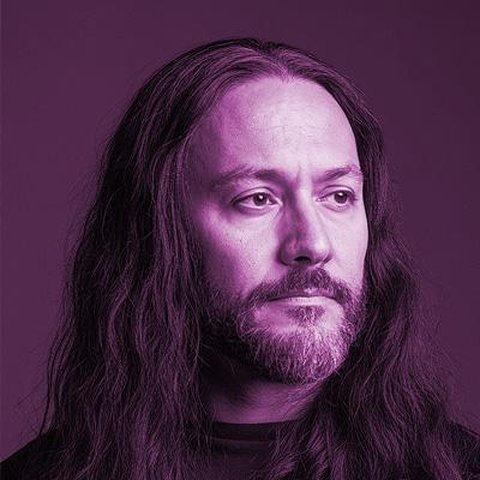
Roberto Campus
HISTORY BEHIND THE DATES
Historical reading
- The Metropolitan Museum of Art — The Roman Republic
The late Republic, Caesar’s death in 44 BC, and the rise of Augustus in 27 BC.
- European Central Bank — Economic and Monetary Union
The stages of monetary union and the start of the single monetary policy in January 1999.
- European Central Bank — Our money
The euro’s introduction in 1999 and the arrival of notes and coins in 2002, including Italy’s participation.