For Marcus, serving Caesar means serving Rome. For Caesar’s enemies, saving Rome means stopping Caesar. Both convictions belong to a city whose old arrangements can no longer contain its power.
A city-state with an empire to govern
Rome’s Republic was not a democracy in the modern sense. Elected offices, popular assemblies, and an aristocratic Senate distributed authority, but access to influence was unequal. Expansion brought wealth, provincial commands, and opportunities for exploitation. It also made the consequences of a struggle between ambitious Romans stretch far beyond Rome. [1]
The two chronologies below meet in Caesar’s career: Rome’s expanding power and the struggle to govern it.
Rome before Caesar’s supremacy
- 509 BC · Traditional date
The kings are expelled; Romans date the Republic’s foundation to this year. Early chronology rests partly on later tradition. [1]
- 264–241 / 218–201 BC
The first two Punic Wars enlarge Rome’s Mediterranean reach. [2]
- 146 BC
Carthage is destroyed; Roman power extends through conquest. [2]
- 133 / 121 BC
The Gracchi pursue reform; their violent deaths mark a dangerous escalation in domestic politics. [3]
- 107–100 BC
Marius holds repeated consulships: military prestige weighs heavily in public power. [3]
- 88 BC
Sulla brings a Roman army against Rome itself. [3]
- 82–79 BC
Sulla’s dictatorship, proscriptions, and constitutional changes leave an enduring warning. [3]
Caesar’s rise
- 100 BC · Conventional date
Caesar is born; his birth year has been debated. [2]
- 60 / 59 BC
An informal alliance with Pompey and Crassus; then Caesar’s first consulship. [4]
- 58–50 BC
The Gallic command brings conquest, resources, and a seasoned army. [5]
- 52 BC
Victory at Alesia over Vercingetorix. [5]
- 49 / 48 BC
The Rubicon and civil war; Pompey is defeated at Pharsalus. [5]
- 46 / 45 BC
Thapsus, then Munda; reform of the calendar accompanies military supremacy. [4] [5]
- Early 44 BC
Caesar holds the dictatorship for life. [4]
- 15 March 44 BC
Caesar is killed at a Senate meeting in Pompey’s complex. [4]
Who wanted what?
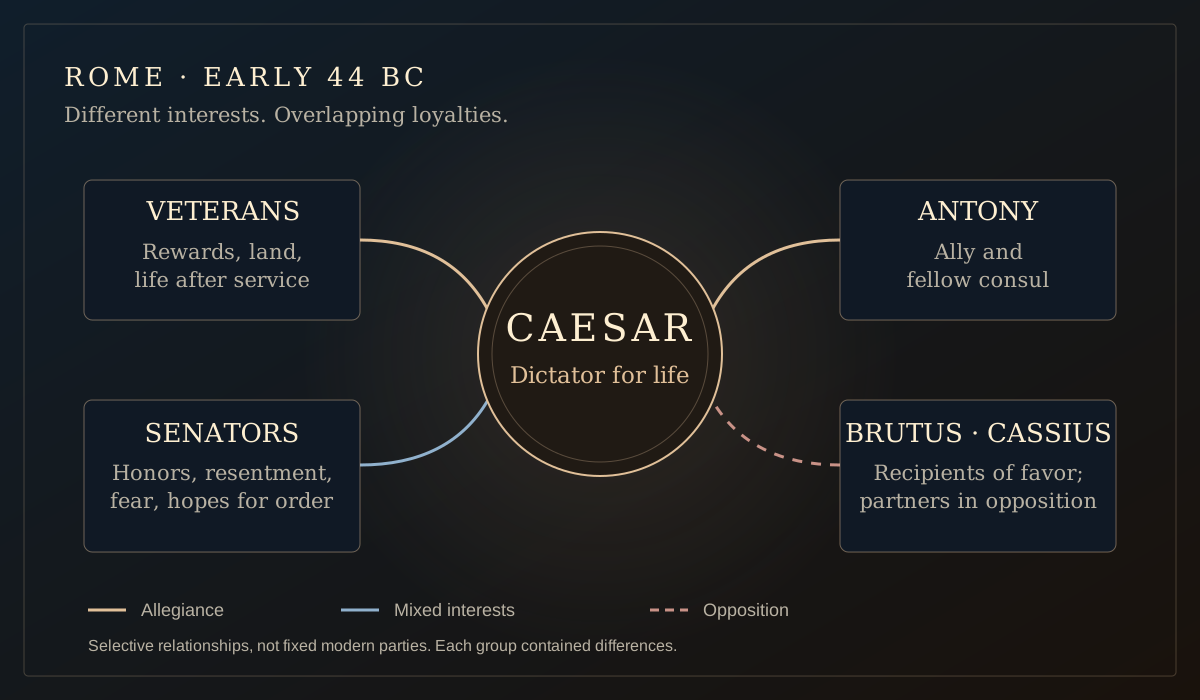
Caesar and his veterans
Victory required a settlement. Caesar distributed rewards and planted colonies; for soldiers, his promises concerned land and a life after service. [5]
Brutus and Cassius
Both had received Caesar’s favor. Opposition could join an objection to permanent one-man rule with personal ambition and rivalry. Plutarch traces the clash of political principle, ambition, and personal rivalry. [5]
Antony
Caesar’s ally and fellow consul in 44 BC: an influential figure whose fortunes were bound to the new order. [4]
The Senate and the city
Neither spoke with one voice. Honors, fear, gratitude, resentment, and hopes for stability overlapped. A senator could benefit from Caesar and still resent dependence on him. [4] [5]
Reform and domination were not mutually exclusive. Caesar adjusted debts without canceling them outright, expanded the Senate, and reorganized the calendar. Useful measures did not resolve the question of who could check his power. [4]
The meeting was not at the Forum
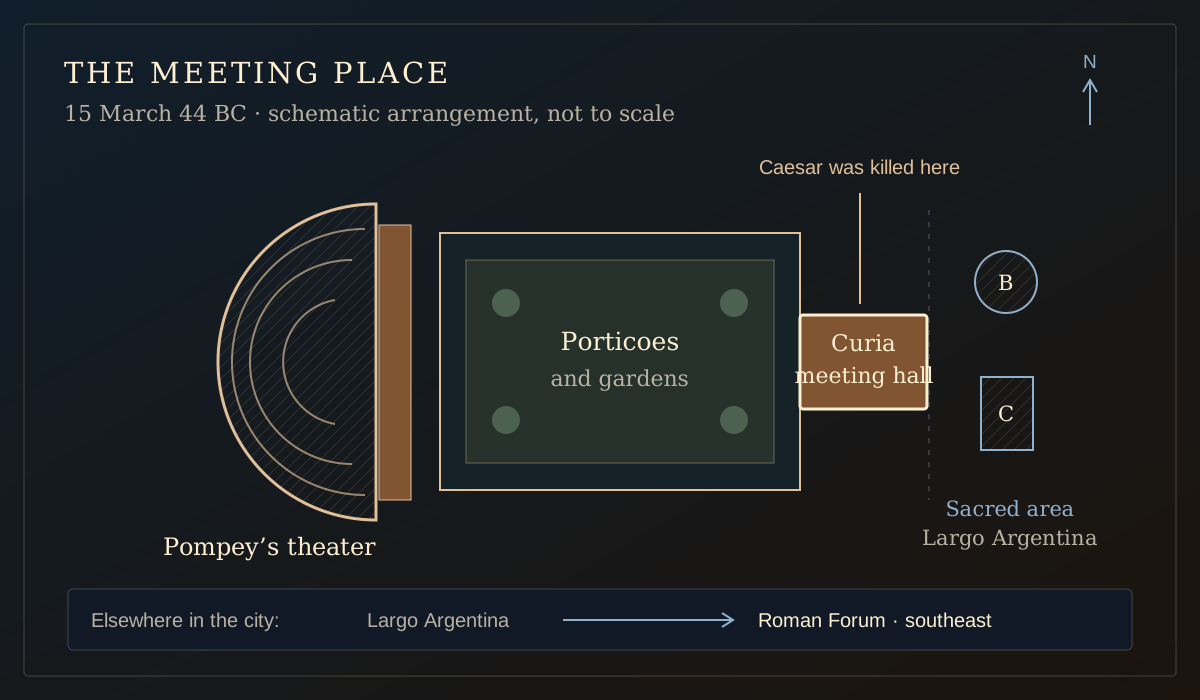
On the Ides, senators assembled in the Curia of Pompey, a hall adjoining his porticoes. Remains of its platform survive behind temples B and C at today’s Largo Argentina. The city’s political business did not occupy only one famous building. [6]
Suetonius describes a petition, a seized toga, and the first attack. He reports twenty-three wounds, but introduces the Greek words sometimes attributed to Caesar as another account—not a verified last utterance. Shakespeare’s “Et tu, Brute?” belongs to a later play. The meaning is “You too, Brutus?”; the certainty belongs to the theater. [4] [7]
The Rome Marcus believes he serves
Marcus serves Caesar because he believes Rome can still be renewed after the decay he has witnessed. His loyalty joins a soldier’s duty to a larger ambition: Rome’s greatness, and a civilization worth handing to its children. The mission matters because he has bound his life to that future. Losing his way home means losing his place in the work he believes must be done.
KEEP EXPLORING
Sources & further reading
- The Metropolitan Museum of Art · The Roman Republic
Institutions, social inequality, expansion, and the traditional foundation date.
- The Met · Italian Peninsula, 1000 BC–AD 1
Punic War chronology, Caesar’s conventional birth year, and the broader historical sequence.
- Appian · Civil Wars, Book I
The Gracchi, Marius, Sulla, and violence within the Republic; a later ancient account.
- Suetonius · Julius Caesar
Sections 19–20, 40–42, 76–82: alliance, reforms, honors, conspiracy, and killing.
- Plutarch · Life of Caesar
Campaigns, veterans, clemency, political motives, and the later historian’s interpretation.
- Sovrintendenza Capitolina · La Curia di Pompeo
Official archaeological description of the meeting hall and surviving platform.
- Folger Shakespeare Library · Julius Caesar, Act 3, Scene 1
The later dramatic tradition, kept distinct from ancient testimony.